Closing Learning Gaps Early: Adaptive Learning Meets Project Aurora Over Dinner with the Taiwanihan Group
A Filipino team building adaptive learning tools for basic education hosts Dr. Yong-Chao Su and the Taiwanihan group to talk about learners, teachers, and the earliest years of a child’s development.
October 8, 2026 | Closing Learning Gaps Early: Adaptive Learning Meets Project Aurora Over Dinner with the Taiwanihan Group
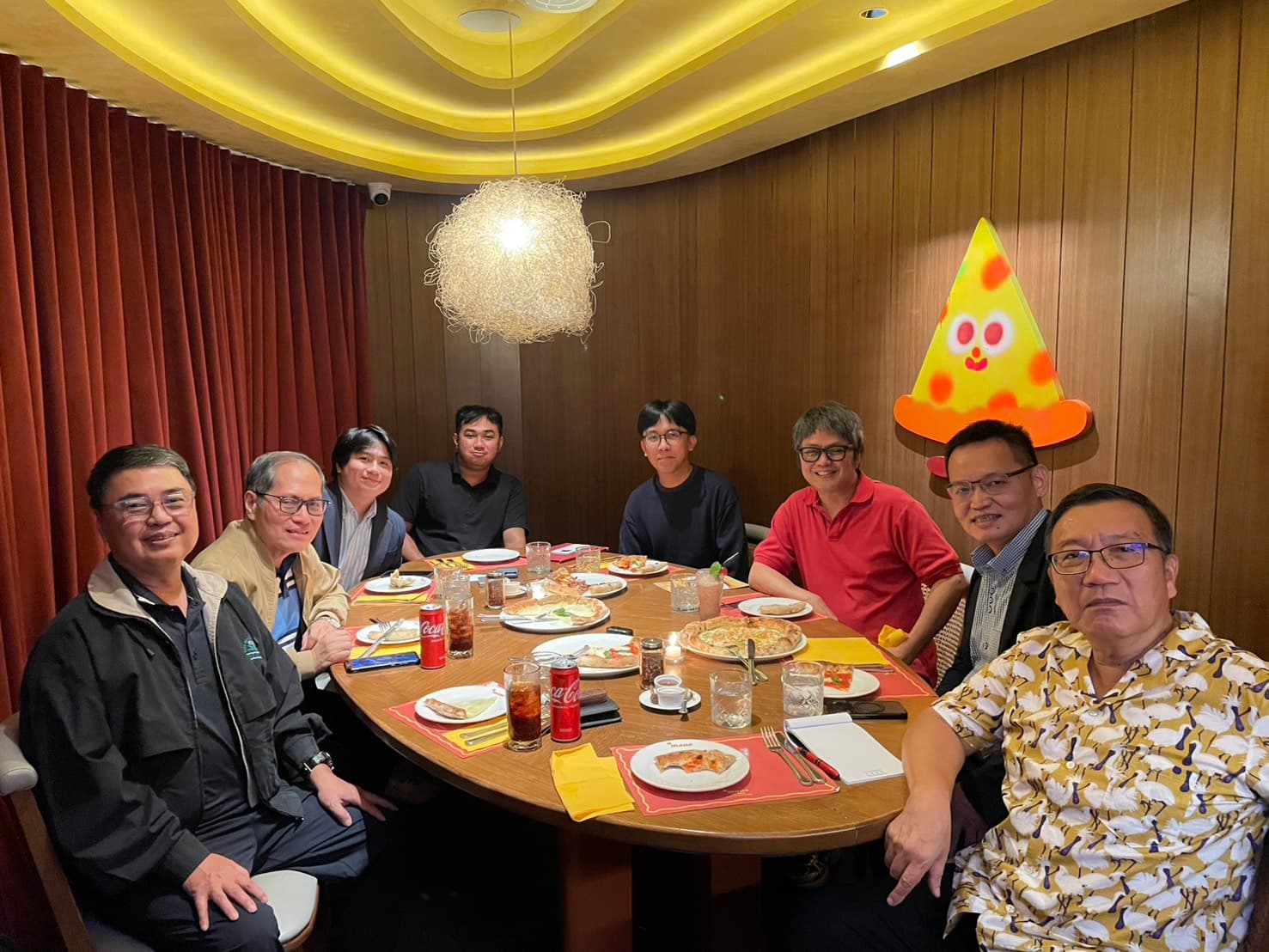
What if every teacher knew, skill by skill, where each student is stuck? Over dinner in Makati City, the Taiwanihan group, Dr. Eing-Ming Wu of Edu-Connect Southeast Asia, Dr. Yong-Chao Su of Kaohsiung Medical University (KMU), Dr. Henry Basilio, Dexter Lloyd Sularte of Bayanihan Lab Network, and Home 2 Taiwan Convener Rodolfo Emperado, sits down with their hosts Perty Montinola, Boni Belen, and Dave Abueg, a group working on adaptive learning for Philippine basic education. It is the last evening of the delegation’s Manila visit.
Learning, one skill at a time. The hosts walk their guests through a platform that breaks K-12 mathematics and science into individual skills, adapts to each learner, and sends teachers reports on what every student has mastered and what still needs work. Its first pilots are in public schools in Aklan, where the team also talks with school leaders about training teachers. The next goal is scale: schools in every region of the country.
Starting even earlier. Dr. Su introduces Project Aurora, the Taiwan–Philippines initiative that brings Taiwan’s brain-computer interface and edge AI technology to the early detection of developmental delay among Filipino children. If adaptive learning helps a student who is falling behind in school, Aurora asks how to catch the problem in the first years of life, before a child ever enters a classroom.
Honest feedback, better programs. The table also hears from Filipino professionals who have taken the semiconductor micro-credential program. Their verdict: the quality is there and they learned a lot, but the jump in difficulty from the first module to the second is steep for anyone without an engineering background. It is the kind of feedback that makes the next cohort’s experience better.
“We make each other more complete.” Dr. Su closes the night with a view of what Taiwan and the Philippines can offer each other: Taiwanese universities and industry helping train Filipino students, and Filipino talent helping Taiwan’s society and industry stay vibrant. “You help us train our students, and we help your society become vibrant,” he says.
This conversation is also a lesson in Transnational Human Capital Development (THCD). Taiwan faces an aging population and rising demand for skilled professionals in healthcare, long-term care, industry, and technology. The Philippines’ strongest contribution is its people, who bring skills, adaptability, and cultural fit, not just labor. That contribution starts long before a career: with a healthy start in life, strong foundations in school, and training that opens doors at home and abroad. Home 2 Taiwan’s role is to build people, not just fill positions, through training, upskilling, and credentialing. Every future H2TW initiative will be read through this same THCD lens.
Stay tuned to our page for more stories of Filipinos building the nation, away from home. 🇵🇭🇹🇼
#Home2Taiwan #THCD #ProjectAurora #AdaptiveLearning #BasicEducation #EdTech #EarlyChildhood #HumanCapital #MicroCredentials #KMU #EduConnect #BayanihanLabNetwork #Bayanihan #Taiwanihan #Philippines #Taiwan